Charting Compliance Pathways Linking Swiss Live Betting Protocols to Casino Bonus Triggers During Football Match Peaks
Geschrieben von Jordan Schröder · 17.9.2026
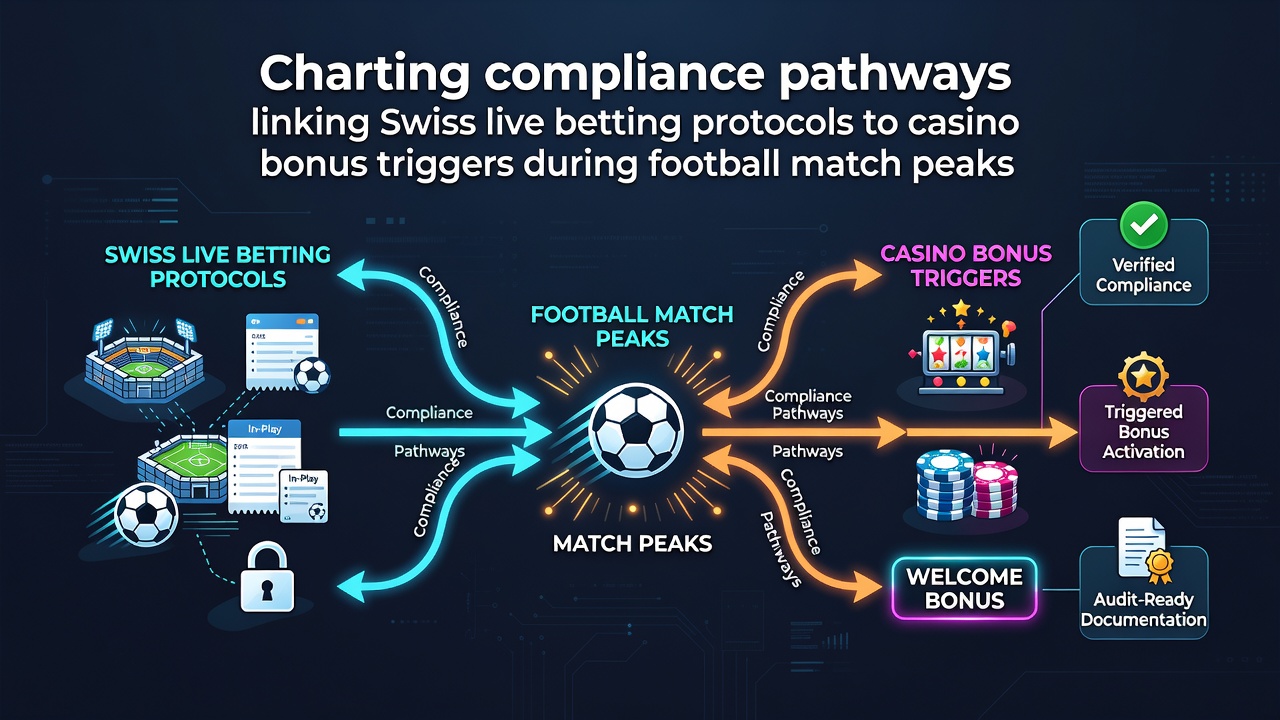
Charting Compliance Pathways Linking Swiss Live Betting Protocols to Casino Bonus Triggers During Football Match Peaks
Swiss gambling oversight requires operators to maintain separate yet interconnected systems for live betting protocols and casino bonus mechanisms, especially when football matches reach peak intensity such as injury time or decisive set pieces. These rules stem from the Federal Act on Gambling and the associated ordinances enforced by the Eidgenössische Spielbankenkommission, which track how in-play wagers on events like corner kicks or penalty decisions interact with bonus eligibility criteria across integrated platforms.
Regulatory Foundations Under Swiss Law
Operators must document every data point generated during live betting sessions, and this documentation feeds directly into bonus trigger evaluations when match momentum shifts rapidly. Data indicates that the Eidgenössische Spielbankenkommission requires real-time logging of stake amounts, odds changes, and user session durations to verify that casino bonus activations do not circumvent deposit limits or responsible play thresholds during those same high-activity windows.
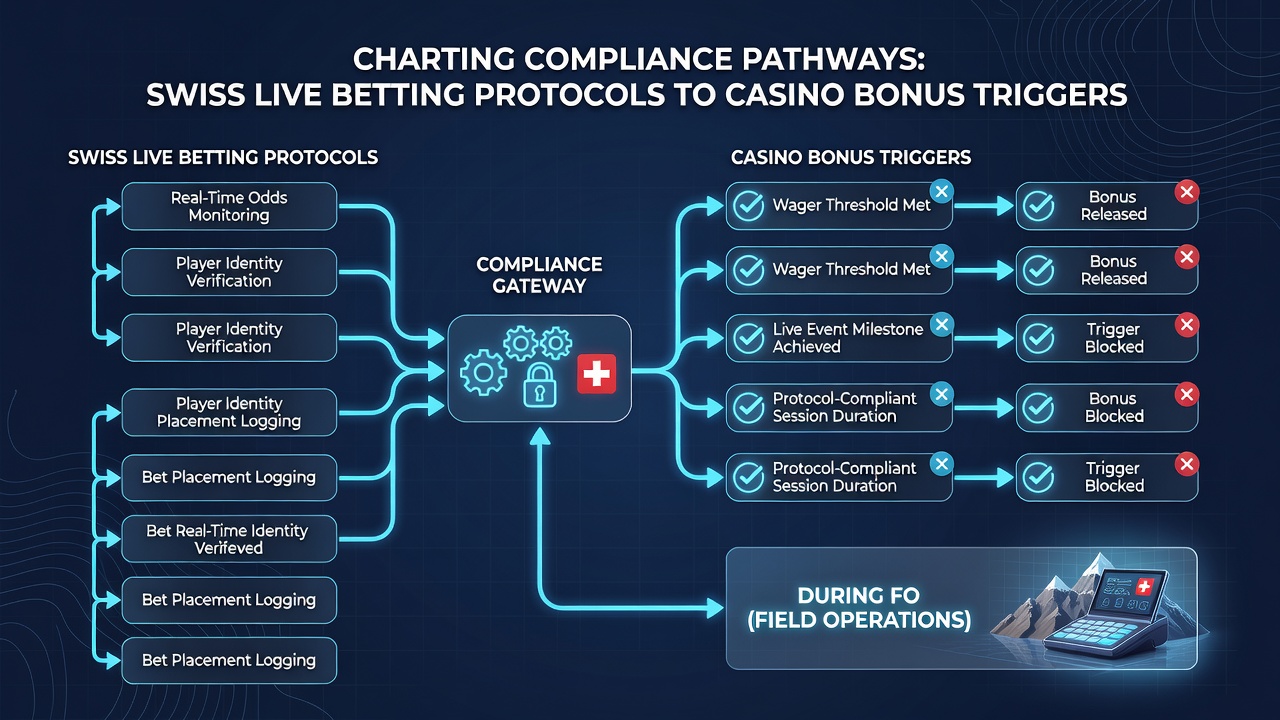
Compliance pathways therefore map live betting event streams onto casino bonus logic through dedicated middleware layers, and these layers receive continuous audits to confirm separation between sports wagering ledgers and casino reward ledgers. According to ESBK guidance documents, any bonus triggered by a live bet placed in the final minutes of a Swiss Super League fixture must carry an auditable timestamp that aligns with both sports and casino reporting modules.
Live Betting Protocols During Match Peaks
Football match peaks generate concentrated data bursts that include rapid odds recalculations for goals, red cards, and substitutions, while operators route these bursts through protocol stacks that flag potential bonus eligibility. Protocols demand that systems distinguish between a live bet placed on the next goal scorer and a subsequent casino free-spin award that may activate if the same user meets volume thresholds within the same session. Researchers at Swiss academic institutions have examined these data flows and found that peak-period latency must stay below 200 milliseconds to satisfy both betting integrity and bonus fairness requirements.
Data Mapping Techniques
Mapping begins with event tagging, where each live betting transaction receives a unique identifier that travels into the casino bonus engine, and this identifier carries metadata about the football match phase. Systems then apply rule sets that determine whether the transaction contributes toward bonus unlocking conditions, such as minimum stake totals reached during extra time. Observers note that September 2026 will introduce updated API specifications requiring enhanced granularity in these tags, allowing regulators to isolate bonus triggers that coincide with specific match events like penalty shootouts in domestic cup competitions.
Integration Points and Audit Trails
Integration points occur at the user account layer, where live betting balances and casino wallet balances remain distinct yet share verification hooks for bonus qualification. Audit trails must record every crossover event, and these trails undergo quarterly reviews by independent examiners who cross-reference timestamps against official match data feeds. Figures from industry reports show that operators handling Swiss Super League coverage process an average of 1.8 bonus triggers per 100 live bets during the final 15 minutes of regulation time, with each trigger requiring separate compliance documentation.
Pathway charting tools allow compliance officers to visualize these connections through heat maps that highlight periods of elevated activity, and the tools incorporate external data sources such as official league timing systems to validate that bonus activations align with actual on-pitch events. One documented approach involves hashing live bet identifiers before they enter the bonus calculation module, thereby preserving data integrity while satisfying cross-system audit demands.
Future Adjustments Effective September 2026
Regulatory updates scheduled for September 2026 will require operators to implement dual-key encryption on all bonus trigger events that originate from live football wagers, and this measure aims to strengthen traceability across both betting and casino environments. Those responsible for system architecture have already begun testing the new protocols against existing match peak datasets to measure any impact on processing speed during decisive moments such as last-minute equalizers.
Compliance documentation will expand to include scenario modeling that simulates how a sudden red card in the 89th minute could cascade into bonus eligibility across multiple user segments. External references such as reports from the Eidgenössische Spielbankenkommission and comparative studies published by the Responsible Gambling Council provide additional benchmarks for these modeling exercises.
Conclusion
Swiss compliance pathways continue to evolve through precise linkage of live betting protocols and casino bonus triggers, particularly when football matches reach their most intense phases. The combination of timestamped event data, encrypted audit trails, and scheduled regulatory enhancements ensures that operators maintain clear separation while meeting transparency obligations. Ongoing monitoring through September 2026 and beyond will determine how effectively these mapped pathways adapt to changing match dynamics and technological standards.