Coordinating Seasonal Event Calendars with Automated Safeguard Activations Across Integrated Wagering and Table Game Platforms Under Federal Guidelines
Geschrieben von Willa Roth · 29.10.2026
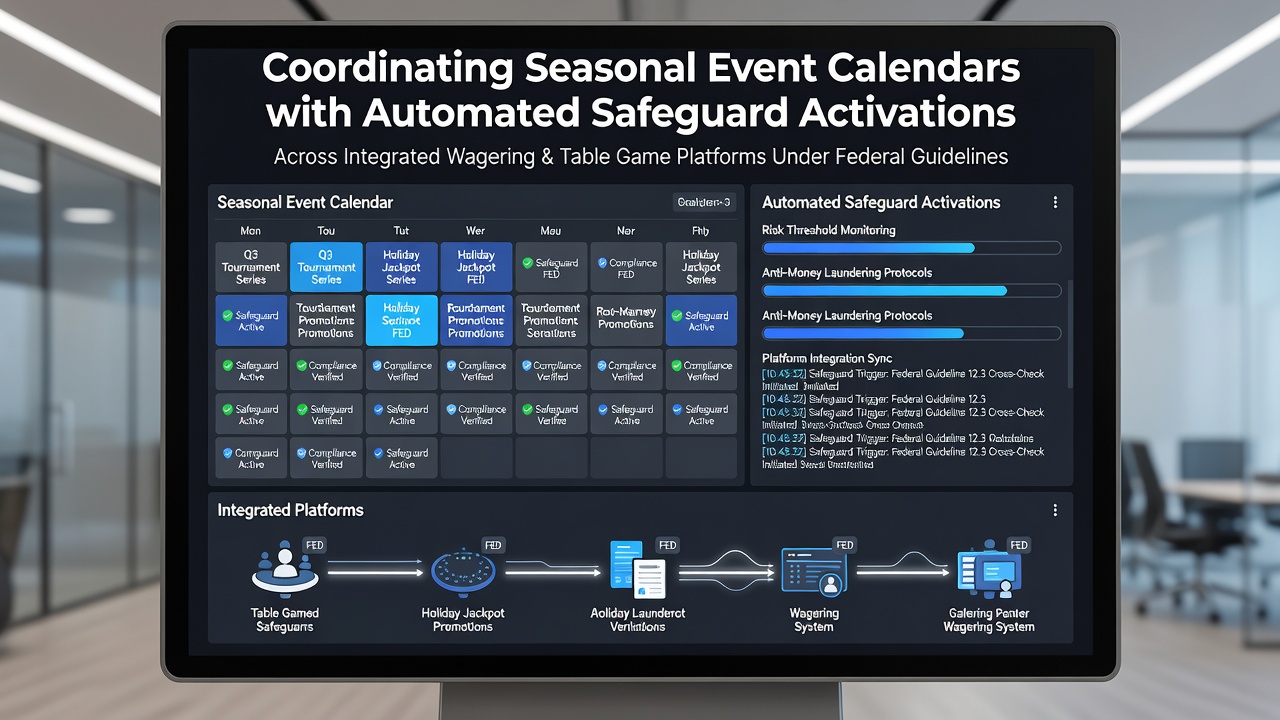
Coordinating Seasonal Event Calendars with Automated Safeguard Activations Across Integrated Wagering and Table Game Platforms Under Federal Guidelines
Operators managing combined sports betting and table game environments must align seasonal event calendars with automated safeguard systems to meet federal compliance standards, and this coordination ensures that triggers for responsible gambling tools activate at precise moments tied to major competitions or promotional windows. Federal guidelines require platforms to synchronize data feeds from league schedules with backend protocols that monitor player activity, while software modules automatically adjust deposit limits, session timers, and reality checks when high-volume periods begin. Research from regulatory bodies shows that such integration reduces instances of extended play during peak football or casino promotion seasons because the calendar data drives the timing of interventions without manual oversight.
Core Components of Calendar and Safeguard Integration
Seasonal calendars from domestic leagues and international tournaments feed directly into platform databases, and these feeds connect to rule engines that activate safeguards when predefined thresholds appear, such as increased match frequency in October 2026 when several European competitions overlap with domestic cup rounds. Table game sections receive the same data streams so roulette or blackjack sessions inherit the same automated limits that apply to sports wagers, creating uniform protection across the entire integrated environment. Data indicates that platforms using real-time API connections between calendar sources and safeguard modules achieve faster response times than those relying on static schedules, and this difference becomes measurable during months when fixture congestion raises overall betting volumes.
Engineers configure the systems to recognize patterns like back-to-back match days or extended casino bonus periods, and the automation then initiates pre-set actions that include mandatory cooling-off prompts or temporary stake reductions. Observers note that federal rules often specify minimum activation criteria, yet platforms retain flexibility to add stricter internal thresholds that still comply with oversight requirements. One study revealed that synchronized systems lowered the number of manual interventions required by compliance teams because the calendar-driven triggers handled routine activations consistently across user accounts.
Technical Architecture Supporting Automated Activations
Modern platforms employ modular software layers where calendar ingestion services update event databases daily, and these updates trigger downstream processes that evaluate player risk profiles against upcoming high-activity windows. Safeguard engines then apply federal-mandated controls such as loss-limit escalations or self-exclusion cross-checks, while logging every activation for audit trails that regulators review during compliance inspections. Integration extends to table game management systems so that live dealer sessions pause or display warnings when calendar events signal elevated risk periods, and this unified approach prevents gaps that could arise from treating sports and casino products separately.
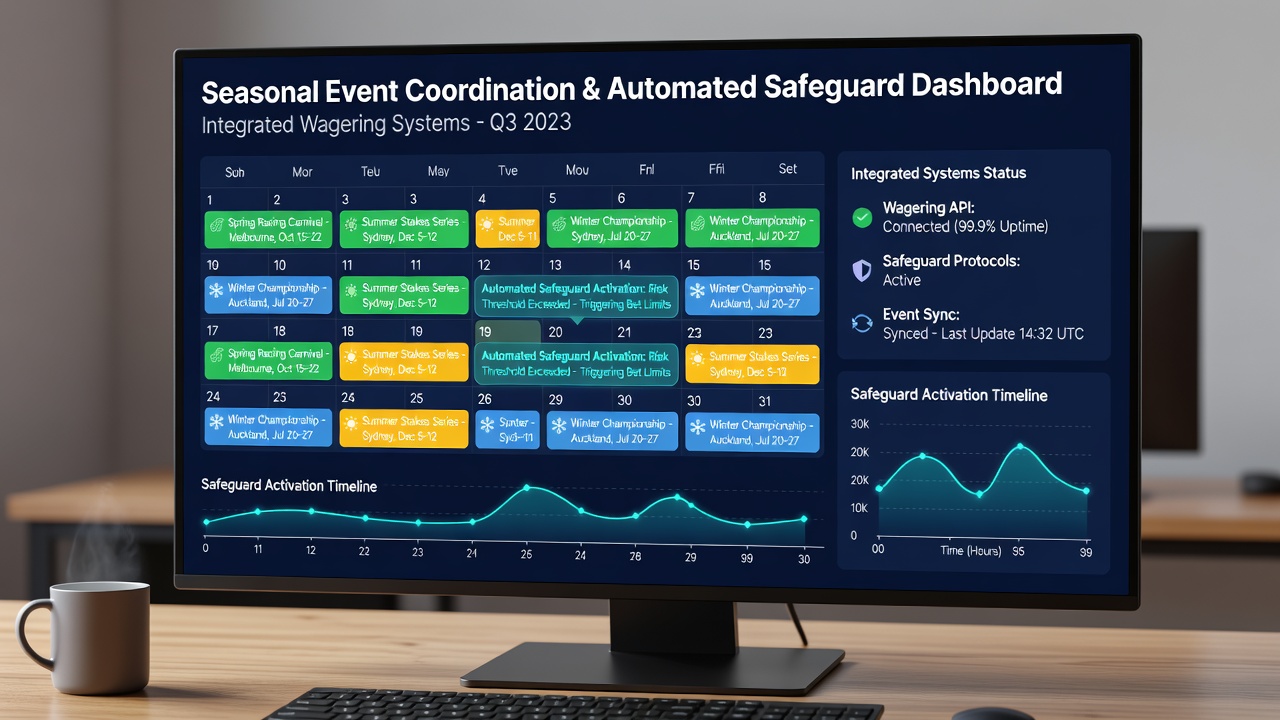
Developers test these connections through simulated calendar shifts that replicate October 2026 fixture loads, and the tests confirm that safeguard activations occur within seconds of event triggers rather than hours later. Figures from industry reports demonstrate that platforms maintaining accurate calendar synchronization experience fewer regulatory findings related to delayed harm-prevention measures, and the same reports highlight how API reliability directly influences overall system performance. Those responsible for platform maintenance often schedule quarterly reviews to update calendar mappings whenever leagues adjust their seasons or introduce new tournament formats.
Regulatory Alignment and Reporting Obligations
Federal guidelines establish baseline requirements for data accuracy and activation timing, and operators must document how their calendar feeds translate into safeguard responses for every major seasonal event. Regulatory bodies such as the National Council on Problem Gambling publish resources that help platforms interpret these rules across different jurisdictions, while academic studies from Canadian research centers provide additional evidence on effective coordination methods. Platforms submit periodic compliance reports that include calendar-driven activation logs, and auditors verify that no high-risk periods passed without appropriate automated responses.
Cross-platform data sharing agreements allow sports and casino modules to reference the same calendar repository, and this shared structure supports consistent application of federal standards even when individual game types run on separate servers. Experts observe that jurisdictions with clear federal mandates see higher adoption rates of automated tools because the rules reduce ambiguity around when safeguards must engage. During October 2026, operators anticipate heavier reporting volumes due to overlapping league schedules, and preparation includes pre-loading safeguard parameters that align with expected fixture peaks.
Implementation Challenges and Operational Adjustments
Legacy systems sometimes struggle to ingest dynamic calendar updates without custom middleware, yet newer platforms built on microservices handle these changes through configurable workflows that adapt to rule revisions. Staff training focuses on interpreting activation reports rather than manually scheduling interventions, and this shift frees compliance teams to address edge cases that fall outside automated parameters. Data from operational reviews shows that thorough testing of calendar-to-safeguard pathways reduces downtime when leagues announce last-minute schedule alterations.
Platforms also maintain fallback procedures that activate manual overrides if automated feeds encounter disruptions, and these procedures still follow federal timelines for safeguard deployment. Coordination extends beyond sports calendars to include casino promotional calendars so that bonus triggers coincide with protective measures rather than bypassing them. Those managing integrated environments report that unified dashboards displaying both event schedules and safeguard status improve oversight efficiency during busy seasonal periods.
Conclusion
Effective coordination between seasonal event calendars and automated safeguard activations enables platforms to meet federal guidelines while maintaining continuous protection across wagering and table game offerings. Systems that ingest accurate calendar data and apply it uniformly deliver consistent interventions during periods of elevated activity such as October 2026 fixture overlaps. Ongoing refinement of these integrations, supported by regulatory resources and research findings, sustains compliance as event schedules evolve and platform architectures advance.