Swiss League Calendars and Casino Payout Cycles: How Regulators Align Football Timing with Live Bonus Eligibility and Harm Prevention Tools
Geschrieben von Jordan Schröder · 1.10.2026
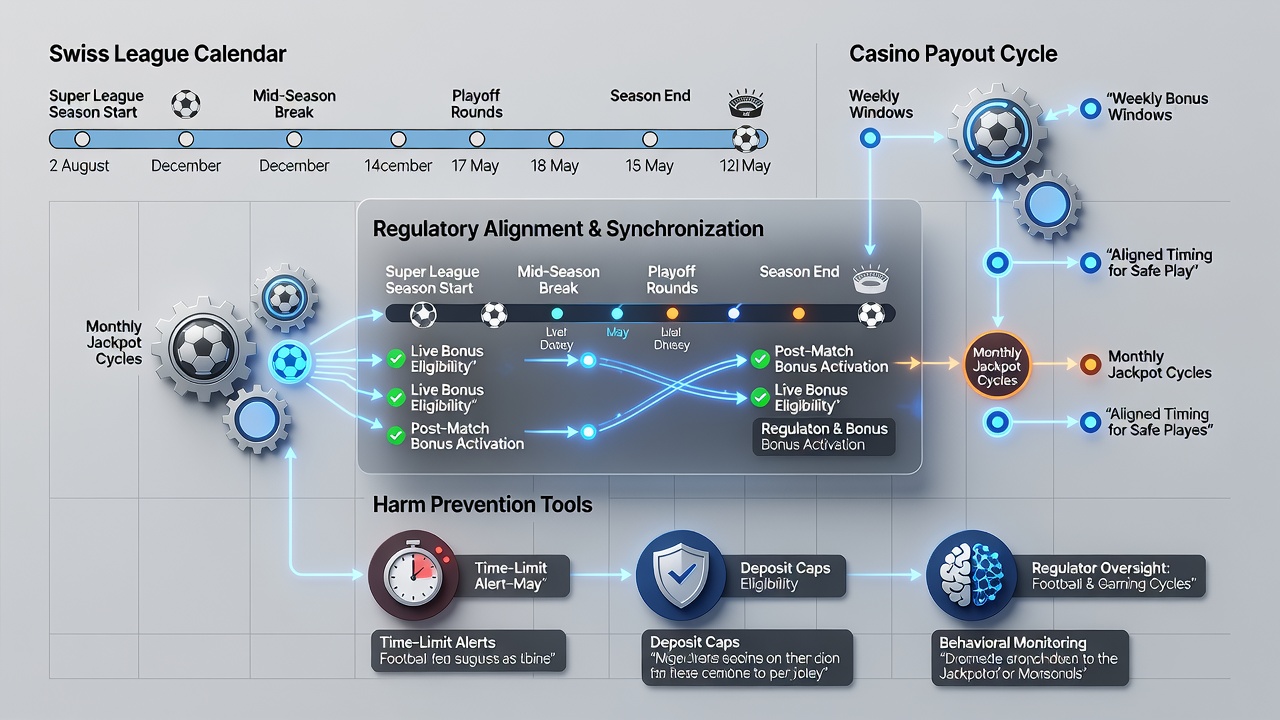
Swiss League Calendars and Casino Payout Cycles: How Regulators Align Football Timing with Live Bonus Eligibility and Harm Prevention Tools
Swiss football calendars set the rhythm for domestic competitions including the Super League and Challenge League with fixed match windows that regulators map directly onto casino payout verification cycles and live bonus eligibility windows. These alignments ensure operators can activate real-time monitoring tools during peak viewing periods when user activity spikes and financial transactions accelerate. Data from league scheduling bodies shows that weekend fixtures cluster between Friday evenings and Sunday afternoons creating predictable high-traffic intervals that coincide with weekly payout processing runs at licensed casino platforms.
Regulators require operators to synchronize bonus trigger points with match start times so that eligibility checks occur at half-time and full-time marks when payout cycles naturally pause for verification. This structure allows automated systems to apply harm prevention measures such as session timers and loss-limit prompts precisely when engagement levels rise. Observers note that the Swiss Federal Gaming Board coordinates these protocols with league authorities to maintain consistent timing across both sports betting and casino environments.
Calendar Structures and Regulatory Mapping
League calendars published each summer list all domestic fixtures through the following spring and regulators overlay payout cycle dates onto those schedules months in advance. Operators receive updated grids that mark specific periods when live bonuses become available only after players complete mandatory cooling-off intervals tied to match duration. Researchers have documented how these mapped timelines reduce simultaneous exposure to multiple bonus offers during extended match sequences that run into late evening hours.
October 2026 features several mid-week Super League rounds that fall on dates when casino payout batches process every 48 hours and regulators have already flagged those windows for enhanced monitoring. The alignment means operators must disable instant bonus redemptions during the 90-minute match blocks unless players have passed prior eligibility screens that include deposit history reviews. Such measures connect directly to harm prevention frameworks that activate when cumulative play time approaches predefined thresholds.
Payout Cycles and Live Bonus Eligibility
Casino payout cycles in Switzerland follow standardized intervals that operators align with football timing to maintain compliance across platforms. When a match begins regulators expect operators to pause new bonus activations until the next payout verification checkpoint passes which typically occurs at 30-minute intervals during live events. This process ensures that eligibility determinations incorporate real-time data on player behavior rather than allowing uninterrupted bonus stacking throughout entire fixtures.
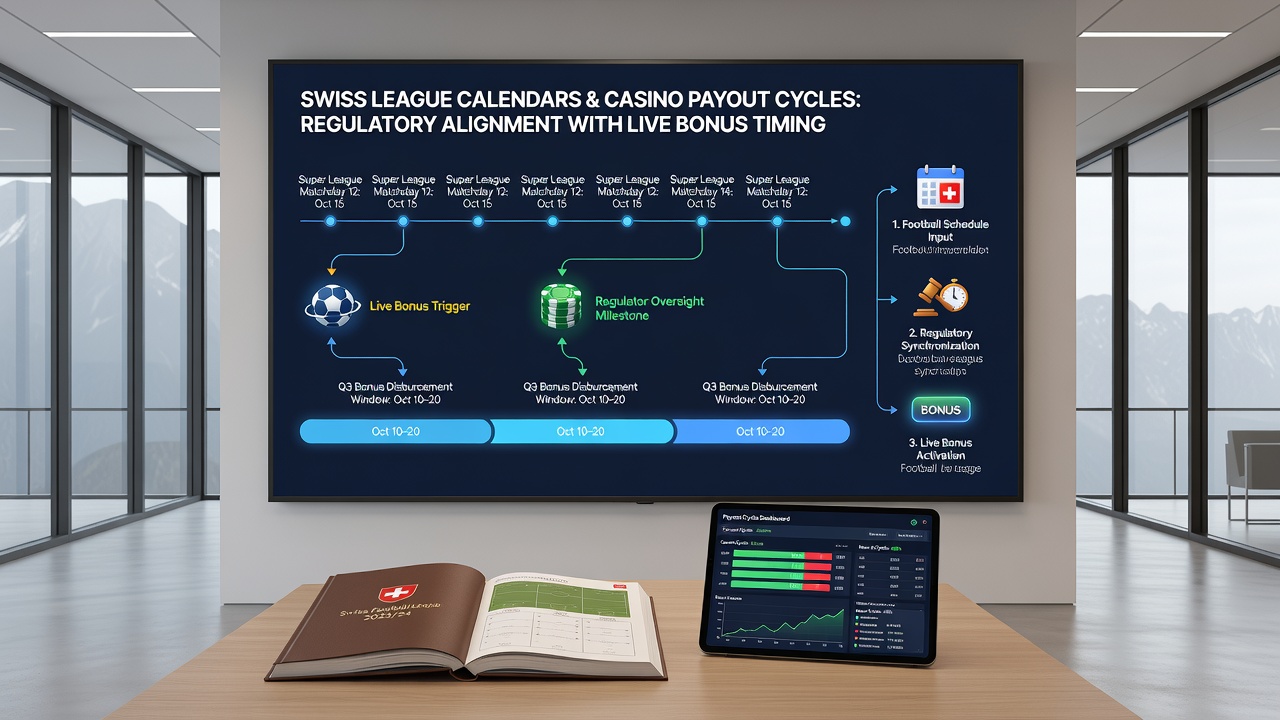
Those who track these systems report that eligibility rules often require players to confirm responsible gambling settings before bonuses unlock during high-stakes periods such as derby matches or title-deciding rounds. The integration creates a layered approach where payout processing serves as a natural checkpoint that inserts harm prevention tools without disrupting the flow of live events. Industry reports indicate that this method maintains transaction integrity while giving operators clear windows to apply session limits or prompt self-exclusion reviews.
Harm Prevention Integration Across Platforms
Swiss oversight links harm prevention tools to both football calendars and casino payout schedules through mandatory system checks that trigger at set intervals. Operators must demonstrate that deposit and wager limits refresh automatically when matches extend into overtime or penalty phases which can shift payout timing. Academic studies from institutions across Europe and North America show that such synchronized interventions correlate with lower rates of extended play sessions during clustered fixture periods.
One documented approach involves embedding time-out prompts at the 60-minute mark of matches when payout cycles often align with mid-game bonus eligibility reviews. Regulators from different jurisdictions including those operating under frameworks similar to the Canadian Centre for Gaming Research have examined comparable models and found that calendar-based alignment improves adherence to spending caps. The Swiss model extends this principle by requiring operators to log every alignment event for audit purposes ensuring transparency across the entire chain from league schedule publication to final payout release.
Conclusion
Swiss regulators continue to refine the connections between league calendars casino payout cycles and harm prevention protocols through ongoing coordination with football authorities and licensed operators. These alignments create structured checkpoints that tie live bonus eligibility directly to match timing and financial verification intervals. The resulting framework supports consistent oversight while accommodating the seasonal rhythm of domestic competitions including key periods such as October 2026. External analyses from sources like the Swiss Federal Gaming Board and the Australian Gambling Research Centre provide additional context on how comparable timing strategies function across regulated markets.